RMH Systems Insights

Industry Knowledge & Automation Blog

Explore the latest technical articles, warehouse automation trends, industrial robotics innovations, and practical guides from our engineering team.

0%

By 2026, global procurement teams will judge Autonomous Mobile Robots by more than speed. They will examine reliability, service coverage, cybersecurity, integration, and total ownership cost. A robot moving cartons smoothly across a warehouse is useful. A robot waiting for spare parts is not.

The International Federation of Robotics reported approximately 113,000 transportation and logistics robots sold worldwide in 2023, representing 24% growth. Its World Robotics 2024 report shows strong demand for automated material movement. Interact Analysis also forecasts continued expansion in the autonomous mobile robot market, driven by labor shortages and e-commerce fulfillment. These figures support optimism, but they do not guarantee a successful purchase. Forecasts can age quickly.

Melonee Wise, a respected robotics executive and researcher, has emphasized that robots should support workers rather than simply replace them. That principle matters during procurement. Buyers should test navigation beside forklifts, measure battery performance across shifts, and inspect how quickly operators learn the controls. They should also request transparent integration documentation from suppliers.

The best Autonomous Mobile Robots for global procurement will not be identical. A cold-storage warehouse needs different protection than an electronics plant. A multinational buyer needs localized support, spare-parts access, and clear data policies. Vendor demonstrations can look perfect. Real facilities are messier.

This guide compares leading systems through practical criteria, including payload capacity, fleet management, safety features, deployment time, software compatibility, and lifecycle cost. Some rankings remain debatable. That is intentional. Procurement decisions deserve evidence, not polished marketing alone.
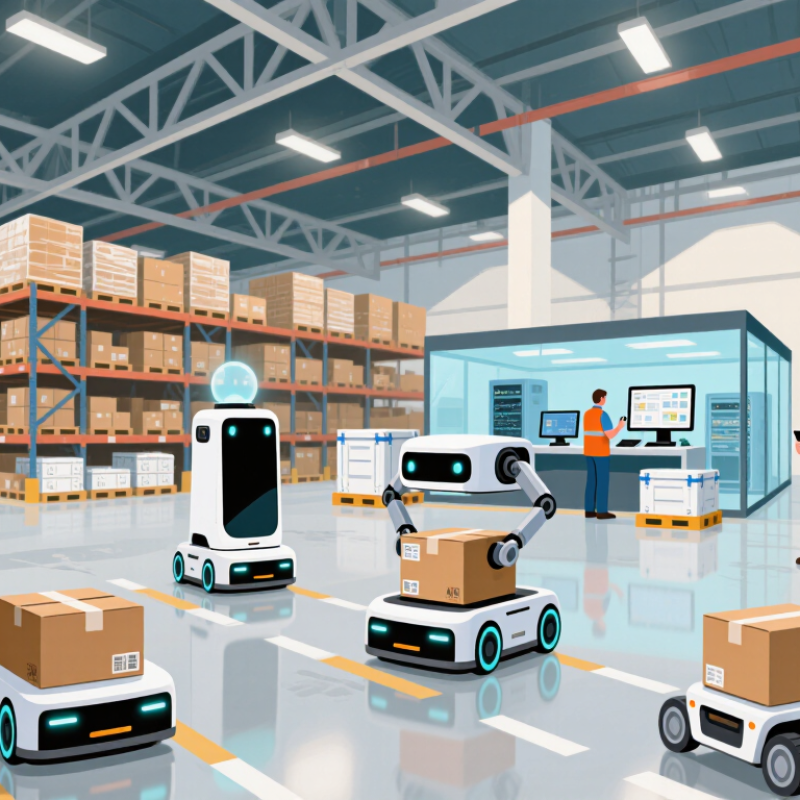
2026 Best Autonomous Mobile Robots for Global Procurement?

What Are Autonomous Mobile Robots and How Do They Work?

Autonomous mobile robots (AMRs) are machines that move materials without fixed tracks or continuous human control. Unlike traditional guided vehicles, they can adjust routes when people, pallets, or equipment block their path. Their main tasks include transporting totes, replenishing workstations, and moving finished goods across warehouses.

An AMR uses lidar, cameras, ultrasonic sensors, and wheel feedback to understand its surroundings. Mapping software creates a digital layout of walls, aisles, loading points, and restricted areas. The robot compares live sensor data with this map, then selects a safe route to its assigned destination. Fleet software coordinates multiple robots, reduces traffic conflicts, and sends tasks from warehouse management systems. A charging station can also support automatic battery management.

No deployment is perfect. Poor maps, reflective surfaces, uneven floors, and changing layouts may reduce navigation accuracy. Procurement teams should test these conditions before approving a global rollout. They should measure payload capacity, turning space, charging time, software compatibility, cybersecurity controls, and local service coverage. A controlled pilot reveals more than a polished demonstration. It should include peak periods, manual interruptions, and emergency stops.

Reliable deployment also depends on worker training and clear operating zones. Local safety requirements, data-handling rules, and maintenance procedures need documented review. A robot may perform well in one facility yet struggle in another. That difference deserves attention during international sourcing.

Which Industries and Procurement Tasks Benefit Most from AMRs?

Autonomous mobile robots are most valuable when procurement teams move the same materials repeatedly. In manufacturing, they can deliver fasteners, packaging, and maintenance parts from storage to production cells. A worker scans a replenishment request, and the robot carries a labeled tote through marked aisles. This reduces walking time and creates a clearer record of internal material flow.

Healthcare facilities benefit from controlled delivery of gloves, sterile supplies, linens, and laboratory samples. AMRs can follow scheduled routes between supply rooms and clinical departments, especially during overnight shifts. Retail distribution centers also use them for put-away, cycle counting, and store-order staging. These tasks involve predictable locations, measurable volumes, and frequent handling. That combination usually supports a stronger business case than irregular transport.

Procurement managers should examine task quality, not robot speed alone. A suitable system must connect with inventory software, stop safely near people, and recover when an aisle is blocked. It should also support different container sizes and local network conditions. Poor labeling can undermine excellent automation. So can weak staff training. A small pilot near receiving or line-side replenishment can expose these gaps before wider deployment. The result may be less dramatic than expected. That is useful. Real savings often come from fewer stockouts, shorter internal routes, and more accurate replenishment data.

How to Compare AMR Navigation, Payload, Safety, and Software

Global AMR procurement should begin with measurable site conditions, not attractive demonstrations. The International Federation of Robotics reported 541,302 industrial robot installations worldwide in 2023, a 2% annual increase. That growth signals stronger automation demand, but it does not guarantee AMR suitability.

Test navigation on reflective floors, uneven thresholds, dense pedestrian zones, and narrow aisles. A robot that follows a clean warehouse map may struggle beside temporary cartons. Ask for obstacle detection ranges, localization recovery time, and performance during Wi-Fi interruptions. Payload needs equal attention. Measure the complete load, including pallets, containers, and shifting materials. A 500-kilogram rating can become misleading when braking distances increase. Small details matter.

Safety evidence should include risk assessments, speed limits, emergency stops, and compliance with ISO 3691-4. Request incident records and validation procedures, not only certificates. The MHI 2024 Annual Industry Report found that 67% of supply-chain professionals expect to adopt robotics and automation within five years. That expectation can accelerate weak purchasing decisions. Software deserves a harder review. Check fleet orchestration, API availability, cybersecurity updates, analytics, and integration with warehouse systems. Global buyers should also confirm regional support, spare-parts access, language coverage, and data-hosting options. My practical concern is simple: pilot results often look better than daily operations. Run trials across several shifts, include peak congestion, and record failures honestly.

2026 Best Autonomous Mobile Robots for Global Procurement

Normalized procurement benchmark across common AMR configurations. Scores combine navigation reliability, rated payload capability, functional safety readiness, and software integration maturity. A score of 100 represents the strongest level typically available in that configuration class.

Navigation evaluates localization and obstacle handling in dynamic indoor environments. Payload reflects typical rated capacity, while safety covers protective sensing, emergency stopping, and standards-oriented design. Software measures API availability, fleet management, and integration with warehouse or manufacturing systems.

What Global Buyers Should Evaluate in AMR Suppliers and Support

Global buyers should evaluate autonomous mobile robot suppliers beyond navigation speed and payload ratings. A warehouse may look simple during a demonstration. Real sites contain uneven floors, narrow aisles, mixed lighting, and temporary obstacles. Ask suppliers to test these conditions before signing a contract. Request measured data for accuracy, uptime, charging time, recovery after stoppages, and safe interaction with workers.

Integration support often determines whether an AMR project succeeds. The supplier should explain how the robots connect with warehouse management, manufacturing, and fleet-control systems. Clarify data ownership, software updates, cybersecurity practices, and remote support procedures. A reliable supplier provides installation plans, operator training, maintenance schedules, and locally available spare parts. Response times matter. A delayed technician can stop an entire shift. Buyers should also examine language coverage, time-zone support, and the supplier’s experience with similar facility layouts.

A pilot project can reveal uncomfortable facts. It may show that a proposed route needs redesigning, or that charging space is insufficient. That is useful evidence. Do not rely only on projected labor savings or a polished dashboard. Compare total ownership costs, including integration, batteries, service visits, training, and future software fees. Ask for customer references with comparable operating conditions. Some suppliers may resist difficult questions. That should influence the evaluation. A strong partner explains limitations clearly and records them in the contract. Perfect forecasts rarely exist. Careful testing is still essential.

How to Build a 2026 AMR Procurement and Deployment Plan

How to Build a 2026 AMR Procurement and Deployment Plan

A reliable AMR plan begins with the warehouse, not a product brochure. Map travel distances, floor conditions, aisle widths, payload weights, and peak-hour congestion. Interview operators who handle exceptions daily. Their practical knowledge often reveals delays that dashboards miss. Define measurable targets, such as reduced walking time, higher picking accuracy, and safe traffic separation. Include local safety requirements, service coverage, software integration, cybersecurity controls, and total ownership costs. Procurement teams should request realistic demonstrations using their own totes and workflows.

Tips: Start with a controlled pilot. Use one shift and a limited route. Measure completed tasks, intervention frequency, charging delays, and operator feedback. Keep a contingency budget for floor repairs, network upgrades, and process changes. The first estimate is often wrong.

Choose suppliers through evidence-based scoring rather than presentation quality. Require acceptance tests for navigation, obstacle recovery, fleet coordination, reporting, and emergency stops. Review spare-parts availability and technician response times in every operating region. A global deployment also needs clear data ownership, training materials, and standardized maintenance records. Avoid scaling before the pilot survives seasonal volume changes. Our experience shows that software integration and exception handling can consume more time than physical installation. That is easy to underestimate. A staged rollout protects operations while exposing weak assumptions early. Some workflows may still perform better with people. That should remain an acceptable finding.

FAQS

Which industries benefit most from autonomous mobile robots?

Manufacturing, healthcare, and retail distribution often gain the most. They move repeated loads between known locations. Examples include fasteners, gloves, linens, and packaged orders. Irregular transport may offer weaker savings.

Which procurement tasks suit autonomous mobile robots?

Replenishment, put-away, cycle counting, and store-order staging are suitable tasks. These workflows have predictable routes and measurable volumes. A labeled tote can travel from storage to a production cell. Simple routes matter.

What site conditions should buyers examine?

Measure aisle widths, floor surfaces, thresholds, travel distances, and peak congestion. Test reflective floors and temporary cartons. Include pedestrian traffic. Clean maps can hide real problems.

How should payload capacity be evaluated?

Calculate the complete load, including containers, pallets, and shifting materials. A stated capacity may not reflect safe braking distances. Heavier loads need careful testing near people. Small details matter.

What safety evidence should procurement teams request?

Request risk assessments, speed limits, emergency-stop tests, and obstacle-recovery records. Check compliance with applicable mobile-robot safety requirements. Ask how incidents are recorded and investigated. Certificates alone are not enough.

Which software capabilities are important?

Review fleet coordination, warehouse-system integration, application interfaces, analytics, and cybersecurity updates. The system should recover from blocked aisles and network interruptions. Confirm data ownership and hosting arrangements. Software can consume more time than installation.

How should a pilot deployment be designed?

Use one shift, one limited route, and familiar containers. Measure completed tasks, charging delays, interventions, and operator feedback. Include busy periods and several operating shifts. The first estimate may be wrong.

When should a company expand deployment?

Scale only after the pilot handles congestion, exceptions, and seasonal volume changes. Confirm spare-parts access and technician response times. Train operators before wider deployment. Some tasks may still work better with people.

Conclusion

Autonomous Mobile Robots are reshaping global procurement by moving materials, inventory, and finished goods through facilities with limited human intervention. This article explains how AMRs use sensors, mapping, software, and real-time decision-making to navigate changing environments safely. It examines the industries and procurement tasks that may benefit most, including warehouse transport, manufacturing logistics, healthcare supply movement, retail distribution, and repetitive internal deliveries.

For global buyers, effective comparison goes beyond purchase price. Key factors include navigation accuracy, payload capacity, battery performance, safety functions, fleet management software, integration options, cybersecurity, maintenance, training, and support availability across regions. The article also outlines how to assess suppliers through product reliability, documentation, spare-parts access, service responsiveness, deployment experience, and long-term scalability. Finally, it presents a practical 2026 procurement plan covering workflow analysis, pilot testing, total-cost evaluation, facility preparation, staff training, performance measurement, and phased expansion.


Oliver

Oliver

Oliver is a dedicated marketing professional with a deep expertise in our company’s offerings. With years of experience in the industry, he has developed a keen understanding of market trends and consumer behavior, enabling him to effectively communicate the value of our products. Oliver regularly......