RMH Systems Insights

Industry Knowledge & Automation Blog

Explore the latest technical articles, warehouse automation trends, industrial robotics innovations, and practical guides from our engineering team.

Blog

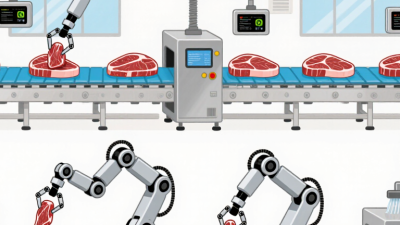
What Are the Top 10 Beef Processing Automation Solutions?

What Are the Top 10 Beef Processing Automation Solutions?

Beef Processing Automation is reshaping how plants move beef products through cutting, trimming, inspection, weighing, and packaging. The strongest systems do more than replace manual tasks; they connect machines, operators, and production data across the line. For example, vision-guided cutters can follow changing carcass shapes, while automated scales help keep portion weights consistent. Robotic deboning, conveyor controls, metal detection, and case packing may also reduce repetitive handling and support traceability. Results still depend on product variation, maintenance, worker training, and each facility’s condition. No machine fixes every bottleneck. Even well-designed equipment needs routine calibration and careful validation before deployment. This guide examines ten leading automation solutions, from robotic cutting and intelligent sorting to sanitation equipment and integrated plant software. Each option is considered for its role, practical benefits, operating requirements, and likely limitations—not just its headline speed. A line that runs faster on paper can still create jams, uneven cuts, or difficult changeovers. Buyers should compare throughput with yield, uptime, cleaning access, safety design, and compatibility with existing equipment. Reliable decisions also require plant trials, clear performance measures, and input from production and maintenance teams. Some gains may be modest. That is worth saying. The aim is a grounded overview, not a promise that automation alone will solve labor, quality, or capacity challenges.
Read more »
Logan By:Logan - November 17, 2026
7 Tips for Choosing K3 Sprinkler Guards

7 Tips for Choosing K3 Sprinkler Guards

Choosing K3 Sprinkler Guards is a small decision with real consequences. A guard must protect the sprinkler from impacts without interfering with its discharge or heat response. The right choice starts with the exact sprinkler model—not just the K-factor or the shape of the frame. Before comparing products, check the sprinkler manufacturer’s documentation. Confirm that the guard is listed or approved for that specific model, orientation, and installation. A cage that looks compatible may still sit too close to the deflector or obstruct water flow. Look closely at the attachment points, too. A loose bracket can rattle above a busy loading area; a poorly fitted guard can create a different risk. The seven tips in this guide cover model compatibility, listing and approval, materials, fit, clearance, installation, and maintenance. Each one helps narrow the choice. None replaces the manufacturer’s instructions or review by a qualified fire-protection professional. Conditions matter. A damp washdown room needs different corrosion considerations from a dry office corridor. One important note: no source article or verifiable expert quotation was provided, so I won’t invent a named specialist’s words. That matters in fire protection, where confident-sounding advice can be mistaken for approved guidance. Use these tips as a practical checklist, then verify the final guard against the sprinkler’s documentation. A careful pause now is better than discovering a mismatch after installation.
Read more »
Oliver By:Oliver - November 12, 2026
What Are the Top Print and Apply Labeling Systems in 2026?

What Are the Top Print and Apply Labeling Systems in 2026?

Print and Apply Labeling Systems have become a visible part of modern production, even when operators barely notice them. In 2026, the strongest systems will do more than print a clear label. They must place it accurately on moving cartons, trays, or curved containers, shift between product runs, and keep pace without creating avoidable stoppages. A useful packaging-science perspective comes from Dr. Andrew Hurley, a packaging professor at Clemson University. The following is an editorial paraphrase, not a verified verbatim quotation: “A label works best when its design, material, and application process are considered together.” That principle matters on the factory floor. A label that looks crisp on a sample may wrinkle on a cold carton or drift on a fast conveyor. Small details matter. This guide compares leading Print and Apply Labeling Systems for 2026 by application accuracy, throughput, changeover ease, integration, and serviceability. It also considers real operating conditions, including dust, tight line layouts, varied package sizes, and frequent label changes. These factors can separate a promising specification from a dependable daily tool. No single model suits every line. A compact applicator may fit a short run, while a high-speed system may better serve continuous production. The comparison ahead highlights strengths, trade-offs, and questions buyers should ask before choosing. Some performance claims still need validation under site conditions. That uncertainty deserves attention, not gloss.
Read more »
Logan By:Logan - November 2, 2026
China Top 10 Automated Guided Vehicle Manufacturers

China Top 10 Automated Guided Vehicle Manufacturers

China’s Automated Guided Vehicles industry is moving from pilot projects toward practical, large-scale warehouse operations. This shift is visible in factories, distribution centers, and cold-chain facilities across the country. Small vehicles now move pallets between storage aisles, loading zones, and production lines with limited human intervention. The International Federation of Robotics reported 276,288 industrial robot installations in China during 2023. That figure represented about 51% of global installations. Industrial robots are not the same as AGVs, but the data shows China’s strong automation ecosystem, supplier base, and manufacturing demand. Interact Analysis also identifies mobile robots as a fast-growing category, driven by e-commerce, labor shortages, and flexible warehouse design. The exact AGV market size varies between reports, partly because some studies include autonomous mobile robots and others do not. This article examines the China Top 10 Automated Guided Vehicle Manufacturers through practical and technical indicators. These include navigation systems, payload capacity, fleet-management software, safety functions, battery performance, integration experience, and after-sales support. Company scale matters. It is not everything. A reliable manufacturer should demonstrate stable operation beyond a showroom. Readers should look for documented deployments, measurable uptime, clear safety testing, and compatible interfaces with warehouse-management systems. Public company materials can be useful, but they may emphasize successful projects and omit limitations. For that reason, this selection should be viewed as a research starting point, not a final purchasing decision. Site conditions, aisle width, floor quality, traffic density, and local service capability can change the outcome significantly.
Read more »
Logan By:Logan - October 28, 2026
2026 Best Autonomous Mobile Robots for Global Procurement?

2026 Best Autonomous Mobile Robots for Global Procurement?

By 2026, global procurement teams will judge Autonomous Mobile Robots by more than speed. They will examine reliability, service coverage, cybersecurity, integration, and total ownership cost. A robot moving cartons smoothly across a warehouse is useful. A robot waiting for spare parts is not. The International Federation of Robotics reported approximately 113,000 transportation and logistics robots sold worldwide in 2023, representing 24% growth. Its World Robotics 2024 report shows strong demand for automated material movement. Interact Analysis also forecasts continued expansion in the autonomous mobile robot market, driven by labor shortages and e-commerce fulfillment. These figures support optimism, but they do not guarantee a successful purchase. Forecasts can age quickly. Melonee Wise, a respected robotics executive and researcher, has emphasized that robots should support workers rather than simply replace them. That principle matters during procurement. Buyers should test navigation beside forklifts, measure battery performance across shifts, and inspect how quickly operators learn the controls. They should also request transparent integration documentation from suppliers. The best Autonomous Mobile Robots for global procurement will not be identical. A cold-storage warehouse needs different protection than an electronics plant. A multinational buyer needs localized support, spare-parts access, and clear data policies. Vendor demonstrations can look perfect. Real facilities are messier. This guide compares leading systems through practical criteria, including payload capacity, fleet management, safety features, deployment time, software compatibility, and lifecycle cost. Some rankings remain debatable. That is intentional. Procurement decisions deserve evidence, not polished marketing alone.
Read more »
Oliver By:Oliver - October 23, 2026
7 Tips to Choose Goods-to-Person Systems?

7 Tips to Choose Goods-to-Person Systems?

Choosing the right Goods-to-Person Systems can reshape warehouse performance, labor use, and customer service. The decision begins with operational reality, not impressive machinery. A system that looks fast in a demonstration may struggle with dusty totes, irregular cartons, or seasonal order spikes. René de Koster, a leading warehouse-operations scholar, offers a useful reminder: “A warehouse is a service facility, not a storage facility.” That idea should guide every evaluation. The best solution must support accurate picking, stable replenishment, safe movement, and practical maintenance. It should also fit the building’s ceiling height, floor strength, aisle layout, and available power. Small details matter. A blocked workstation can quietly reduce hourly output. This guide presents seven practical tips for comparing Goods-to-Person Systems. It examines throughput, SKU variety, order profiles, integration, ergonomics, scalability, and total cost. It also considers implementation risk, because software delays and weak training can damage a promising project. Some calculations may look precise, yet demand forecasts remain uncertain. That is worth admitting. Your fastest option today may become restrictive after two years of growth. Review vendor claims against measured warehouse data. Ask for references from facilities with similar order volumes and product characteristics. Watch the system during replenishment, not only during a polished demonstration. A reliable choice balances automation with human judgment. It does not simply chase maximum speed.
Read more »
Oliver By:Oliver - October 18, 2026
10 Tips for Choosing Package Sortation Systems

10 Tips for Choosing Package Sortation Systems

Choosing the right Package Sortation Systems can shape every stage of a fulfillment operation. A reliable system moves parcels smoothly from induction to the correct shipping lane. It can reduce manual handling, improve order accuracy, and protect delivery schedules during peak periods. Yet, equipment that performs well in one facility may struggle in another. Every warehouse has different conditions. A narrow building may require compact conveyors and flexible routing. A high-volume operation may need scanners, sortation chutes, and software that respond within milliseconds. Parcel size, weight, packaging materials, labor skills, maintenance access, and future growth also deserve careful attention. Small details matter. A noisy motor near a packing station can affect the working environment. A poorly placed photo-eye can create repeated stoppages. This guide presents ten practical tips for evaluating Package Sortation Systems with greater confidence. It considers throughput, accuracy, integration, safety, energy use, scalability, and total ownership costs. Real performance depends on more than impressive specifications. Site testing, operator feedback, service support, and clear performance data often reveal the difference between a promising proposal and a dependable investment. No system is perfect. Buyers may overlook cleaning access, software training, or seasonal volume changes. That mistake can become expensive later. A thoughtful evaluation should question assumptions, compare realistic operating conditions, and leave room for improvement. The goal is not to select the most complex system. It is to choose a solution that fits the facility, supports its people, and performs consistently as package demands change.
Read more »
Oliver By:Oliver - October 13, 2026
What Are the Top China Warehouse Conveyor Systems?

What Are the Top China Warehouse Conveyor Systems?

China’s warehouse sector is moving from manual handling toward faster, data-driven material flow. Warehouse Conveyor Systems now support picking, sorting, storage, and dispatch across electronics, retail, automotive, and parcel operations. MarketsandMarkets estimates that the global conveyor system market may grow from approximately USD 7.8 billion in 2023 to USD 10.6 billion by 2028. Its report identifies automation, labor shortages, and e-commerce growth as major drivers. MHI’s 2024 Annual Industry Report also shows that supply-chain leaders continue investing in robotics, sensors, and integrated software. The direction is clear. But “top” does not simply mean the fastest conveyor. In China, leading systems often combine belt conveyors, roller conveyors, vertical lifts, sorters, barcode scanners, and warehouse management software. A parcel hub may process cartons continuously, while a cold-storage facility demands corrosion resistance and stable performance at low temperatures. Small design differences matter. John Paxton, former CEO of MHI, stated, “The importance of supply chain technology and innovation has never been more evident.” This observation fits China’s market, where manufacturers increasingly compete through integration, service coverage, and customization. Still, published market forecasts are not perfect. Definitions vary. Some reports measure equipment sales, while others include software and installation services. Buyers should therefore examine throughput, noise, energy use, maintenance access, safety controls, and after-sales support. This guide reviews the top China Warehouse Conveyor Systems by technology, application, scalability, and practical reliability. The strongest option may not be the cheapest. It may be the one that keeps moving at 2 a.m., when every delayed carton becomes visible.
Read more »
Oliver By:Oliver - October 8, 2026
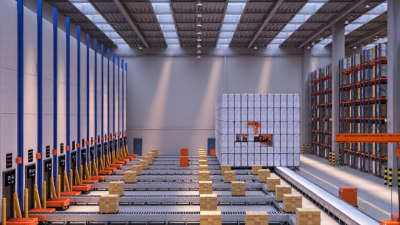
2026 Best Automated Storage and Retrieval Systems to Buy

2026 Best Automated Storage and Retrieval Systems to Buy

Choosing the 2026 Best Automated Storage and Retrieval Systems to Buy requires more than comparing glossy product brochures. Warehouse leaders must examine throughput, storage density, retrieval accuracy, payload limits, and software compatibility. A system that moves 300 totes per hour may still disappoint if replenishment delays interrupt picking. Small details matter, too. Consider aisle width, ceiling height, fire protection, floor tolerance, and maintenance access before signing a contract. This guide evaluates Automated Storage and Retrieval Systems through practical warehouse conditions, not marketing claims alone. It considers shuttle systems, crane-based solutions, vertical lift modules, robotic cube storage, and pallet-focused platforms. Each option suits different inventory profiles, order volumes, labor models, and expansion plans. Evidence should include manufacturer specifications, independent testing, customer experience, and measurable uptime data. Vendor demonstrations help, but they rarely reproduce peak-season pressure. There is no universal winner. Not even close. A high-speed system can become expensive overcapacity for a modest operation. Meanwhile, a simpler design may deliver stronger value with easier servicing. Cost estimates also deserve caution, because integration, building changes, training, spare parts, and software upgrades can reshape the final budget. Some published performance figures reflect ideal conditions, not mixed inventory or human interruptions. The recommendations ahead aim to support informed purchasing decisions in 2026. They highlight operational fit, reliability, safety features, implementation risks, and long-term ownership costs. Buyers should verify every critical claim with site-specific testing and contract terms. A careful pause may prevent a very costly surprise.
Read more »
Ethan By:Ethan - October 3, 2026
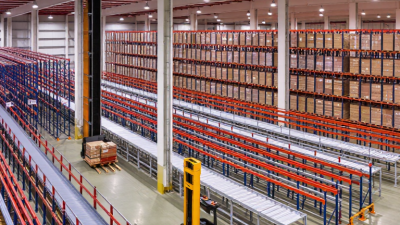
What Are the Best Warehouse Racking Systems in China?

What Are the Best Warehouse Racking Systems in China?

Selecting the best Warehouse Racking Systems in China starts with the work your facility needs to perform. China has a broad supplier base, with options ranging from selective pallet racks to drive-in, push-back, carton-flow, and cantilever systems. Automated storage solutions may also suit operations with high throughput or limited floor space. Yet the most advanced design is not automatically the right one. A busy distribution center handling mixed pallets has different needs from a parts warehouse storing long steel sections. Start with measurable details: pallet size, maximum load, daily movements, forklift type, aisle width, and clear ceiling height. Check the condition and capacity of the floor slab, too. A few centimeters can affect a forklift’s turning path or usable storage space. Details decide. Ask suppliers for layout drawings, load calculations, material specifications, and clear guidance on installation and inspection. Where local engineering or safety requirements apply, have qualified professionals review the design before purchase. A reliable comparison looks beyond the quoted price. Assess manufacturing experience, quality-control procedures, project references, warranty terms, spare-part availability, and after-sales support. Compare equivalent specifications; one quotation may include installation while another covers equipment only. Request evidence for important performance and load claims rather than relying on sales language. That matters. And be candid about uncertainty: forecasts for future inventory or throughput are often wrong. A flexible layout can help, but it cannot fix poor measurements or unclear operating plans. The right system is the one that safely fits the goods, equipment, building, and workflow—not simply the one with the most impressive brochure.
Read more »
Logan By:Logan - September 28, 2026
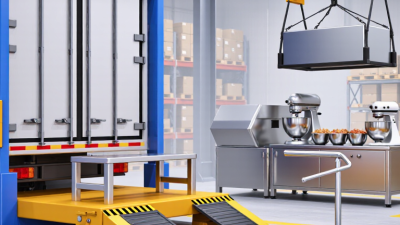
What Are Industrial Scales and Which Type Is Right?

What Are Industrial Scales and Which Type Is Right?

Industrial Scales are no longer simple platforms with digital displays. They are measurement systems supporting production, inventory control, quality assurance, and regulated trade. A weighbridge may handle trucks, while a hygienic bench scale measures ingredients beside a stainless-steel mixer. The application changes everything. Industry reports from Grand View Research and MarketsandMarkets identify manufacturing, logistics, food processing, and retail as major demand sectors. Their findings also highlight automation, connectivity, and higher weighing accuracy as continuing market drivers. However, market growth does not make every scale suitable for every workplace. NIST Handbook 44 provides technical requirements for commercial weighing equipment in the United States. OIML R 76-1 addresses non-automatic weighing instruments internationally. These references emphasize accuracy, repeatability, verification, and environmental influence. A dusty warehouse can affect performance. So can vibration, temperature changes, and uneven loading. Dr. John S. Cameron, a former NIST metrology specialist, expressed a practical principle: “A weighing result is only meaningful when its uncertainty is understood.” That idea deserves attention. Capacity alone is not enough. The right Industrial Scales choice depends on load size, resolution, platform design, cleaning conditions, data integration, and legal-for-trade needs. Select a floor scale for pallets. Choose a bench scale for controlled workstation tasks. Consider checkweighers when speed and reject accuracy matter. Crane scales suit suspended loads, but they demand careful safety procedures. Some purchasing decisions still focus too heavily on price. That shortcut fails surprisingly often. A cheaper scale may create costly rechecks, production delays, or inconsistent records. This guide compares the main types, explains their strengths, and shows where each design may become a poor fit.
Read more »
Oliver By:Oliver - September 23, 2026