RMH Systems Insights

Industry Knowledge & Automation Blog

Explore the latest technical articles, warehouse automation trends, industrial robotics innovations, and practical guides from our engineering team.

0%

Beef Processing Automation is reshaping how plants move beef products through cutting, trimming, inspection, weighing, and packaging. The strongest systems do more than replace manual tasks; they connect machines, operators, and production data across the line. For example, vision-guided cutters can follow changing carcass shapes, while automated scales help keep portion weights consistent. Robotic deboning, conveyor controls, metal detection, and case packing may also reduce repetitive handling and support traceability. Results still depend on product variation, maintenance, worker training, and each facility’s condition. No machine fixes every bottleneck. Even well-designed equipment needs routine calibration and careful validation before deployment.

This guide examines ten leading automation solutions, from robotic cutting and intelligent sorting to sanitation equipment and integrated plant software. Each option is considered for its role, practical benefits, operating requirements, and likely limitations—not just its headline speed. A line that runs faster on paper can still create jams, uneven cuts, or difficult changeovers. Buyers should compare throughput with yield, uptime, cleaning access, safety design, and compatibility with existing equipment. Reliable decisions also require plant trials, clear performance measures, and input from production and maintenance teams. Some gains may be modest. That is worth saying. The aim is a grounded overview, not a promise that automation alone will solve labor, quality, or capacity challenges.
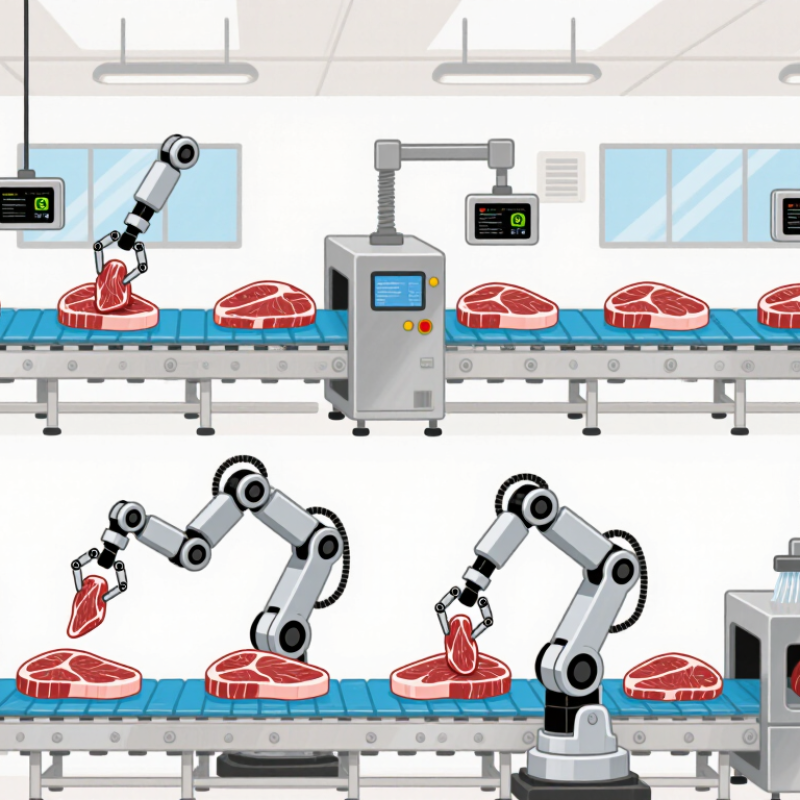
What Are the Top 10 Beef Processing Automation Solutions?

How Automation Supports Each Stage of Beef Processing

Beef processing automation works best as a connected chain, not a single impressive robot. At receiving, electronic identification and controlled conveyors help maintain lot records and steady movement. During slaughter, automated hide pullers, carcass splitters, and saws reduce repetitive handling. Machine-vision inspection can flag visible defects for trained staff. USDA NASS reported 32.8 million cattle slaughtered commercially in 2023, showing the scale these systems must handle (Livestock Slaughter 2023 Summary).

After chilling, robotic deboning and trimming cells use cameras and force sensors to follow bone contours. Portion cutters, checkweighers, and packing equipment help standardize downstream work. Inline temperature probes, metal detectors, and automated labels support quality checks and traceability. Their value depends on calibration, sanitation, and skilled operators—not speed alone. A camera can miss a greasy seam. People still matter. Integration between older equipment and new software can also be awkward, so performance needs regular review.

Tips: Track yield, downtime, and rework at each stage before expanding automation. Keep it measurable.

10 Beef Processing Automation Solutions by Processing Stage

The chart counts example automation solution types mapped to each stage. It describes the examples shown, not industry adoption rates or market measurements.

Examples include: animal and carcass identification, hide-removal assistance, evisceration assistance, robotic carcass splitting, vision-based inspection support, chilling monitoring, automated deboning, portion cutting, packaging and labeling, and sanitation systems. Actual equipment and automation levels vary by facility.

Which Solutions Automate Slaughter and Carcass Dressing?

Automated slaughter and carcass dressing begin with controlled animal-conveying systems that reduce abrupt movement and keep work areas predictable. Identification and tracking tools link each carcass to process records, while positioning equipment helps operators perform consistent steps. Automated stunning controls can support repeatable settings, but trained staff must verify animal condition and equipment performance. Precision matters.

After the authorized slaughter step, automated transfer and bleeding-line controls manage carcass movement. Mechanical hide pullers, legging tools, and head-removal systems reduce repetitive knife work. Bunging equipment and automated evisceration aids help limit contact between gut contents and meat. Carcass splitters create a more even center cut, and powered dressing tools assist with trimming. Vision systems can flag visible defects or missed tissue for human review. Wash cabinets and monitored sanitation cycles help clean equipment between production runs.

These are ten useful solution areas, though plants combine them differently. Sensors cannot judge every unusual carcass, and a machine can repeat a poor setup with impressive consistency. Clear cleaning access, guarded machinery, and routine checks matter as much as speed. Human oversight remains essential.

How Cutting, Deboning, and Trimming Systems Improve Efficiency

Beef processing automation works best when each station matches the cut, carcass variation, and line speed. Common options include carcass-splitting saws, primal-cut saws, portion cutters, and vision-guided cutting. Robotic deboning, powered hand tools, trimming cells, conveyors, checkweighers, and inline inspection round out the toolkit. Together, these ten approaches can reduce repetitive handling and improve portion consistency. Results still depend on setup.

Cutting systems use guides, sensors, or camera data to position meat more consistently. Deboning equipment can help workers separate meat along bones, while assisted tools reduce repetitive effort.

Trimming systems remove excess fat and connective tissue to meet product specifications. A smoother flow between stations also means fewer pauses for lifting and repositioning. Small errors matter. A missed joint line can send a robot off course, so teams still need to inspect cuts and adjust settings for different carcasses. Automation is not a cure-all; poor calibration can create rework.

Tips: Track yield, trim loss, and stoppages during trials. Test new settings on a small batch, then compare results. Keep blades sharp, sensors clean, and operators involved in daily checks. This takes time, but skipped checks can cost more.

What Technologies Automate Inspection, Packaging, and Traceability?

Automated inspection works best when several checks support one another. Machine-vision cameras can flag surface discoloration, uneven cuts, or misplaced labels under consistent lighting. X-ray systems and metal detectors can identify certain foreign objects, while checkweighers catch portions outside set limits. Each tool has blind spots. Results depend on product position, equipment settings, and routine verification.

Packaging automation links portioning, sealing, and inspection. Robotic pick-and-place systems can move chilled cuts into trays, and vacuum or modified-atmosphere packaging equipment can seal them with repeatable pressure. In-line seal inspection can detect wrinkles or gaps before cases leave the line. Small details matter. A clean seal is not proof of safe handling, so staff still need documented checks and corrective procedures.

Traceability connects each package to its production history. Barcode or RFID readers can record lot numbers, timestamps, line locations, and packaging data as products move through the facility. When scanners miss a label, the record can become incomplete; practical systems need exception alerts and clear recheck steps. Integration with production software can speed up targeted recalls, but data quality requires regular review. Automation reduces repetitive work, though it does not remove the need for trained operators. Even a well-designed line may need adjustment when cut sizes or packaging materials change.

How to Compare and Select Beef Processing Automation Solutions

Choosing beef processing automation starts with the work, not the equipment list. Map each task, from carcass handling to portioning and packing. Record current throughput, staffing, product sizes, and common sources of rework. These figures create a useful baseline.

Compare solutions by more than advertised speed. Check how they handle product variation, cleaning routines, floor space, and integration with existing lines. Ask about changeover time, operator training, maintenance access, and support for unexpected downtime. A fast system may still create bottlenecks downstream. Small details matter.

Tips: Request a live trial using representative cuts. Measure yield, cycle time, and stoppages across several shifts. Ask staff who will operate and clean the equipment to review the setup.

Before selecting a system, define what success means for your plant. It might mean steadier portion weights, fewer manual lifts, or less trim loss. Verify each claim with documented test conditions, not a single ideal run. A tidy comparison sheet can still miss awkward realities, like limited washdown time or an older conveyor that cannot keep pace. Pilot results may also vary between shifts, so leave room for adjustment.

FAQS

Which cutting systems can improve beef processing efficiency?

Options include carcass-splitting saws, primal-cut saws, portion cutters, and vision-guided systems. The right choice depends on cuts, carcass variation, and line speed.

How can automation improve cutting consistency?

Guides, sensors, and camera data help position meat more consistently. A missed joint line can still send a robot off course.

What equipment can support deboning and trimming?

Robotic deboning and powered hand tools can reduce repetitive effort. Trimming cells remove excess fat and connective tissue to meet product specifications.

What should a plant measure during a trial?

Track yield, trim loss, cycle time, and stoppages across several shifts. One ideal run is not enough.

How should a plant choose processing equipment?

Map tasks from carcass handling to portioning and packing. Record throughput, staffing, product sizes, and common sources of rework before comparing systems.

What factors matter beyond advertised speed?

Check product variation, cleaning routines, floor space, and line integration. Also review changeover time, training, maintenance access, and downtime support.

How can teams check whether a system fits their line?

Request a live trial with representative cuts. Ask operators and cleaning staff to review the setup, including washdown time and conveyor pace.

What daily checks help prevent rework?

Keep blades sharp, clean sensors, and involve operators in routine checks. Small errors matter. Calibration still takes attention.

Conclusion

Beef Processing Automation connects equipment, sensors, and software to coordinate the main stages of production, from carcass handling through final packaging. Automated slaughter and dressing systems can support consistent positioning, controlled operations, and hygienic workflows, while cutting, deboning, and trimming technologies help improve precision, reduce repetitive manual work, and make better use of each cut. The right setup depends on product requirements, facility layout, throughput, and workforce needs.

Further automation can assist with inspection by capturing process data and flagging items for review. Packaging systems can help standardize portions, sealing, and labeling, while traceability tools link products to relevant production records. When comparing solutions, processors should consider food-safety procedures, ease of cleaning, reliability, integration with existing equipment, operator training, maintenance, and total cost of ownership. A practical selection process starts with clear goals and prioritizes solutions that fit the facility’s needs and can scale as operations change.


Logan

Logan

Logan is a seasoned marketing professional with a deep expertise in the company's product portfolio. With a passion for innovation and a keen understanding of market trends, he plays a pivotal role in shaping the company’s online presence. Logan frequently contributes to the company's professional......