RMH Systems Insights

Industry Knowledge & Automation Blog

Explore the latest technical articles, warehouse automation trends, industrial robotics innovations, and practical guides from our engineering team.

0%

Choosing among Liquid Filling Machines starts with the product, not the machine catalogue. A thin sanitizer, a foaming beverage, and a thick sauce behave differently at the nozzle. Viscosity, temperature, particulates, and foaming can change fill accuracy and cleaning needs. Even the bottle matters: a narrow neck may require a different nozzle and handling system.

Packaging engineer Jim Pittas of PMMI offers a useful principle: “Match the equipment to the product and the production need.” Treat that as a practical guide, not a substitute for a product trial. Ask suppliers to test your actual liquid, container, and target fill volume. Watch for drips, foam, and inconsistent levels. Small details show up quickly on the line.

A careful comparison should cover filling technology, changeover time, cleaning access, container range, and expected output. Consider what happens when recipes or package sizes change. A machine that runs fast in a demonstration may be awkward during routine production. That distinction is easy to miss.

There is no universal best choice. Set measurable requirements, review technical documentation, and confirm service support before purchasing. Some assumptions may need revisiting after testing. That is normal. This guide explains how to compare machine types, assess production needs, and ask suppliers questions that lead to a more dependable decision.
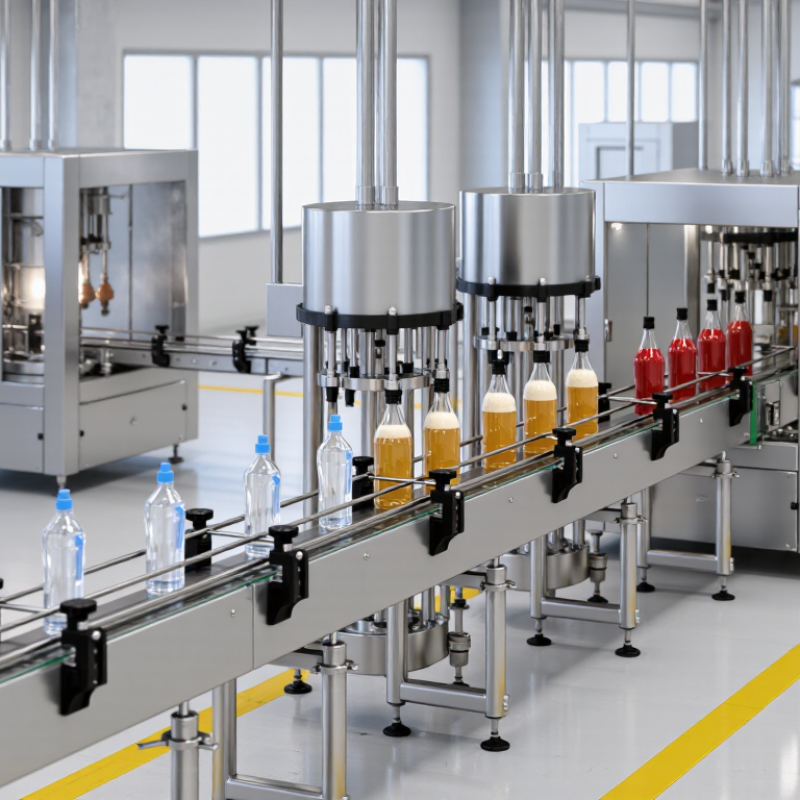
How to Choose the Right Liquid Filling Machine?

Identify the Liquid’s Properties and Packaging Requirements

A liquid’s behavior matters as much as its name. Water-like juice flows differently from honey, lotion, or a sauce containing pulp. Measure viscosity at the temperature used on the filling line, not only at room temperature. Also check whether the product foams, separates, or contains particles. These details affect nozzle size, pump type, fill speed, and cleaning access. A small bench test can reveal splashing or dripping before equipment is ordered. Do not assume two liquids with similar thickness will fill alike.

Packaging requirements narrow the choice further. Record each container’s material, opening size, fill volume, and shape. A narrow-neck bottle may need a slim nozzle; a wide jar can tolerate a different approach. Note whether the line handles several container sizes, and how often changeovers occur. PMMI’s 2022 State of the Industry report put U.S. packaging machinery shipments at about $10.9 billion in 2021, up 12.9% from 2020. That broad market figure is not a machine-selection rule, but it reflects the scale and variety of packaging needs. Test the actual liquid in the actual container, including a nearly empty bottle. That last check is easy to miss. Temperature shifts, bubbles, and residue can still surprise you.

How to Choose the Right Liquid Filling Machine? — Identify the Liquid’s Properties and Packaging Requirements

Viscosity is a useful starting point when selecting a filling method: free-flowing liquids often suit gravity or pump filling, while thicker products may need positive-displacement equipment. These are approximate values at around 20°C; actual viscosity varies with formulation, temperature, and measurement conditions. Also consider foaming, particulates, target dose, and the container opening.

Assess Production Volume, Speed, and Automation Needs

Choosing a liquid filling machine starts with the amount you need to produce, not the fastest speed on a specification sheet. Record daily and peak demand, then account for cleaning, breaks, and product changeovers. Start with real data. A line running 1,000 bottles per hour on paper may deliver less during a shift. Bottle size, liquid thickness, and the time needed to position containers all affect practical output.

Compare the required output with the machine’s tested operating rate. Ask how speed changes with your actual container and liquid, and request a trial using both. Then test it. Watch for drips, inconsistent fill levels, and bottles that pause or tip at the infeed. A small speed reduction can be worthwhile if it improves accuracy and reduces rejected product.

Automation should match both volume and staffing. A compact setup may suit short runs with frequent product changes, while higher-volume production may benefit from automatic container handling and filling. Check how quickly operators can adjust settings, clean product-contact parts, and resume after a stop. These details are easy to underestimate. I have seen production estimates look tidy until changeovers were included; build in a realistic allowance, and revisit it after observing a full shift.

Compare Filling Technologies for Accuracy and Product Compatibility

How to Choose the Right Liquid Filling Machine?

Compare Filling Technologies for Accuracy and Product Compatibility

Choosing a filler starts with the liquid, not the machine label. Gravity systems suit free-flowing products, while piston fillers handle thicker liquids such as honey or shampoo. Peristaltic pumps can reduce product contact with machine parts, but tubing wear may affect repeatability. Foamy liquids need slower, controlled filling to prevent bubbles and messy container rims. There is no universal winner.

For accuracy, compare dose variation, not just the advertised speed. OIML R 61-1:2017 defines accuracy classes for automatic gravimetric filling instruments, linking permitted error to package mass. Use its framework when discussing weighing-based systems, then verify performance with your own product. Run repeated fills at different speeds and temperatures; record average fill, range, and rejects. NIST’s Handbook 44 also illustrates why measurement equipment needs defined tolerances and regular checks. A small test run can reveal issues a brochure misses.

Tips: Bring the actual liquid and container to a machine trial. Check whether viscosity, particles, or foam change the dose. Keep a simple log. Even careful tests can miss seasonal product changes, so leave room to adjust settings.

Evaluate Machine Materials, Controls, and Cleaning Requirements

The machine’s wetted parts should match the product, not just the budget. Stainless steel is common, but the grade, surface finish, and seal materials matter. A thick syrup can cling to rough surfaces, while acidic or salty products may require closer material review. Ask for documentation on every surface that touches the product, including hoses, gaskets, and valves. Do not assume that “stainless” tells the whole story.

Controls should be clear enough for operators to adjust fill volume and speed without guesswork. A recipe setting can reduce setup errors when containers or products change. Check whether the machine shows alarms, fill counts, and key settings at the point of use. Keep the screen readable with wet gloves. More automation is not always better; poorly understood settings can create new mistakes.

Cleaning needs deserve a real test. Look for tool-free access to nozzles and product paths, plus drainable areas where liquid will not pool. Ask how long a routine wash takes and what parts must be removed. That matters. A machine that looks easy to clean in a brochure may still have awkward corners. Request a demonstration using your actual container format and cleaning routine, then inspect the seals and nozzle openings afterward. One detail is easy to miss. Cleaning time can affect the whole shift.

How to Choose the Right Liquid Filling Machine? - Evaluate Machine Materials, Controls, and Cleaning Requirements
Evaluation Area Typical Options or Considerations What to Verify Practical Selection Guidance
Product-contact materials Stainless steel, commonly 304 or 316L; product-compatible seals, hoses, and gaskets Confirm the exact wetted parts and check chemical compatibility with the liquid, cleaning agents, and operating temperature. 316L is often selected for corrosive products or demanding hygienic applications. 304 may be suitable for less corrosive products, subject to compatibility review.
Surface finish and hygienic design Smooth, drainable product paths; polished surfaces where required by the process Request the specified surface-finish value and measurement method. Check for crevices, dead legs, and areas where liquid can remain trapped. Use the finish and design criteria required by the product, cleaning procedure, and applicable regulations; requirements vary by application.
Filling technology Piston, pump-based, gravity, or flow-meter filling Test with the actual liquid across its expected viscosity, foaming behavior, particulates, and temperature range. Piston and pump systems are commonly considered for thicker liquids; gravity or flow-meter systems may suit free-flowing liquids. Confirm accuracy with product trials.
Controls and recipe management PLC-based controls, HMI, stored recipes, adjustable fill settings Check whether operators can set and save fill volume, speed, and other relevant parameters, and whether access levels or change records are needed. Choose controls that match the number of products, changeover frequency, operator training needs, and site documentation practices.
Filling accuracy and speed Performance depends on the filling method, container, liquid properties, and line setup. Request acceptance-test criteria and verify performance using representative containers and product. Clarify how accuracy is measured. Compare tested results at the required production rate rather than relying only on a nominal speed or accuracy figure.
Cleaning method Manual cleaning, clean-in-place (CIP), or a combination, depending on machine design Determine which product-contact parts can be cleaned in place and which must be removed. Review cleaning steps, drainage, and access. Do not assume a machine is CIP-capable. Confirm the required cleaning method, utilities, and validated procedure with the supplier and your process team.
Changeover and disassembly Tool-assisted or tool-free removal of nozzles, hoses, pumps, and product-contact components Time a representative changeover and check whether parts are easy to identify, inspect, clean, and reinstall correctly. Frequent product or container changes favor accessible components and clear changeover instructions.
Container and nozzle compatibility Container size, opening geometry, nozzle dimensions, and filling height Run trials with the smallest and largest containers and the intended closure or conveyor arrangement. Confirm that nozzle positioning and drip-control features suit the product and container without creating excessive splash or foam.
Utilities and installation Electrical supply, compressed air, water, and drainage requirements vary by configuration. Obtain the machine utility schedule, footprint, operating environment limits, and installation requirements. Check site capacity and layout before ordering, including space for operation, maintenance, and cleaning.
Documentation and support Operating instructions, cleaning procedures, parts lists, and maintenance guidance Confirm the documents supplied, training availability, spare-parts lead times, and service arrangements. Prioritize documentation and support that meet your facility’s safety, quality, and maintenance requirements.

Verify Safety Standards, Supplier Support, and Total Cost of Ownership

Choosing the right liquid filling machine starts with verifying safety, not comparing brochure speeds. Ask for the machine’s risk assessment, guarding details, emergency-stop locations, and electrical protection specifications. Check that these documents match your intended product, container, and operating conditions. A certificate alone is not enough; request test records and clear instructions for cleaning, adjustment, and safe maintenance. Small details matter.

Supplier support can determine how quickly a production line recovers from a fault. Confirm who handles installation, operator training, troubleshooting, and spare-parts supply. Ask about typical response times and which components are kept in stock. Then calculate total cost of ownership: purchase price, installation, changeover labor, cleaning, energy, maintenance, consumables, and expected downtime. A lower quote may hide costly format changes or service delays. Estimates are imperfect, so compare them using the same operating hours and assumptions.

Tips: Test with your actual liquid and containers. Record fill accuracy, changeover time, and cleaning effort during the trial. Have operators review the controls; their feedback may reveal awkward steps that a specification sheet misses.

FAQS

Why should I test the liquid before choosing a filling machine?

Viscosity, foam, separation, and particles affect pumps, nozzles, and filling speed. Test at the filling-line temperature. Small bench tests help reveal splashing or dripping.

What packaging details should I record?

Note container material, opening size, shape, and fill volume. A narrow-neck bottle may need a slim nozzle. Test the actual liquid in the actual container.

Why test nearly empty containers?

Low liquid levels can change flow and expose residue or dripping. Bubbles and temperature shifts can also affect results. Easy to miss.

How do I estimate practical production speed?

Compare required output with a tested rate using your real liquid and containers. Include cleaning, breaks, and changeovers. Paper estimates can look tidy.

What should I watch during a machine trial?

Check fill accuracy, drips, and bottles that pause or tip at the infeed. Record changeover time and cleaning effort. Test it.

Should I choose manual or automatic filling?

Match automation to production volume, staffing, and changeover frequency. Short runs may suit a compact setup. Higher-volume lines may benefit from automatic container handling.

What safety information should I request?

Ask for risk assessments, guarding details, emergency-stop locations, and electrical protection specifications. Request test records and clear cleaning and maintenance instructions. A certificate alone is not enough.

How can I compare the total cost of different machines?

Include purchase, installation, labor, cleaning, energy, maintenance, consumables, and downtime. Use the same operating hours and assumptions for each estimate. I still might underestimate changeovers.

Conclusion

Choosing the right Liquid Filling Machines begins with understanding the product and its packaging. Consider the liquid’s thickness, foaming behavior, temperature, and sensitivity, along with the container type, opening size, and fill volume. These factors help narrow down machine designs and filling methods that can handle the product consistently without compromising packaging quality.

Next, match the machine’s capacity and automation level to current production needs and expected growth. Compare filling technologies for accuracy, speed, and compatibility with the liquid, then assess construction materials, controls, and how easily the equipment can be cleaned and maintained. Before making a decision, verify relevant safety features, the availability of supplier training and technical support, and the total cost of ownership, including installation, operation, maintenance, and potential upgrades. A balanced evaluation helps ensure the machine fits both daily production requirements and long-term business goals.


Logan

Logan

Logan is a seasoned marketing professional with a deep expertise in the company's product portfolio. With a passion for innovation and a keen understanding of market trends, he plays a pivotal role in shaping the company’s online presence. Logan frequently contributes to the company's professional......