RMH Systems Insights

Industry Knowledge & Automation Blog

Explore the latest technical articles, warehouse automation trends, industrial robotics innovations, and practical guides from our engineering team.

0%

China’s Automated Guided Vehicles industry is moving from pilot projects toward practical, large-scale warehouse operations. This shift is visible in factories, distribution centers, and cold-chain facilities across the country. Small vehicles now move pallets between storage aisles, loading zones, and production lines with limited human intervention.

The International Federation of Robotics reported 276,288 industrial robot installations in China during 2023. That figure represented about 51% of global installations. Industrial robots are not the same as AGVs, but the data shows China’s strong automation ecosystem, supplier base, and manufacturing demand. Interact Analysis also identifies mobile robots as a fast-growing category, driven by e-commerce, labor shortages, and flexible warehouse design. The exact AGV market size varies between reports, partly because some studies include autonomous mobile robots and others do not.

This article examines the China Top 10 Automated Guided Vehicle Manufacturers through practical and technical indicators. These include navigation systems, payload capacity, fleet-management software, safety functions, battery performance, integration experience, and after-sales support. Company scale matters. It is not everything.

A reliable manufacturer should demonstrate stable operation beyond a showroom. Readers should look for documented deployments, measurable uptime, clear safety testing, and compatible interfaces with warehouse-management systems. Public company materials can be useful, but they may emphasize successful projects and omit limitations. For that reason, this selection should be viewed as a research starting point, not a final purchasing decision. Site conditions, aisle width, floor quality, traffic density, and local service capability can change the outcome significantly.
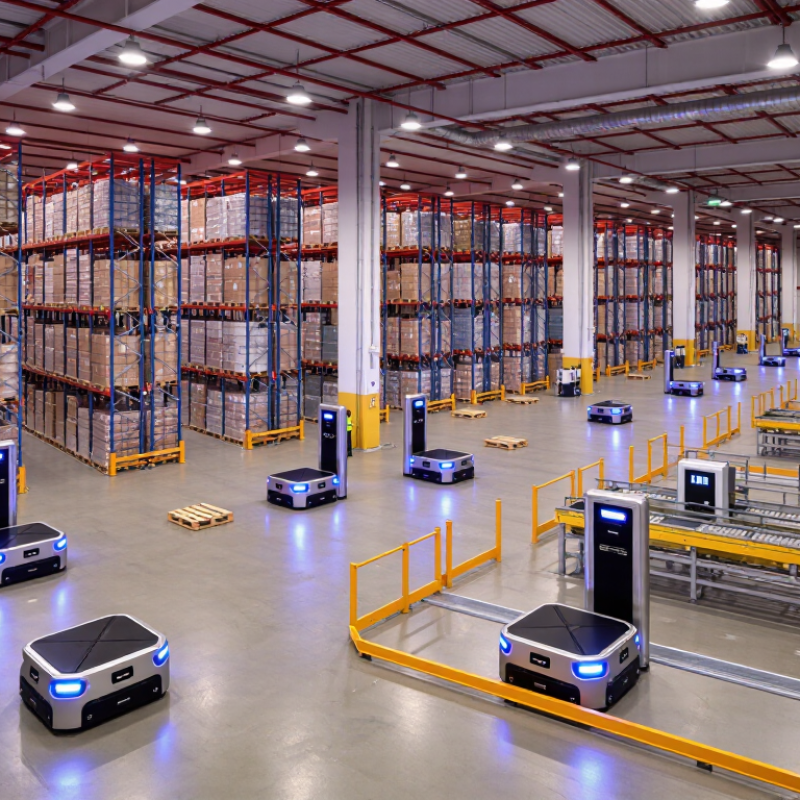
China Top 10 Automated Guided Vehicle Manufacturers

What Is an Automated Guided Vehicle and How Does It Work?

An automated guided vehicle (AGV) is a mobile machine designed to transport materials without a human driver. It may carry cartons, pallets, bins, or production tools across a warehouse or factory. AGVs usually follow magnetic tape, painted lines, reflectors, or digital maps. Their routes are planned around storage racks, workstations, doors, and charging areas.

Inside the vehicle, a controller interprets instructions and sensor signals. Cameras, laser scanners, bumpers, and proximity sensors help detect people, walls, and unexpected objects. When the path is clear, motors move the AGV at a controlled speed. If an obstacle appears, it slows down or stops. Small details matter. A loose pallet, blocked aisle, or dirty sensor can interrupt the entire route.

In daily operation, software assigns transport tasks and monitors battery levels, traffic, and delivery points. Workers often scan a load before movement begins, then confirm its arrival at the destination. This process improves traceability and reduces repetitive lifting. However, AGVs are not magic. A poorly mapped floor can create delays, and weak charging plans may stop vehicles during busy shifts. Safety testing, clear walkways, regular maintenance, and trained operators remain essential. The most useful system is not always the fastest one; it is the one that behaves predictably when conditions change.

Key Technologies Used in China’s AGV Manufacturing Industry

China’s AGV manufacturing industry relies on several navigation technologies. LiDAR-based SLAM allows vehicles to map warehouses without fixed tracks. Cameras improve recognition near shelves, workers, and loading stations. Some factories still use magnetic strips or QR markers. These methods remain practical where routes rarely change. Hybrid navigation can reduce downtime during layout adjustments.

Sensor fusion is equally important. The controller combines LiDAR, cameras, wheel encoders, and inertial data. This helps the vehicle detect drift on dusty floors or uneven concrete. Safety scanners create protective zones around moving equipment. When a person enters the zone, the AGV slows or stops. Reliable fleet management software assigns tasks, balances traffic, and records battery status. Industrial Wi-Fi is common, while private 5G can support larger facilities.

Battery technology also shapes daily performance. Lithium batteries support opportunity charging during short pauses. Charging docks need accurate positioning and thermal monitoring. In factory trials, small calibration errors caused repeated docking failures. That lesson is easy to overlook. Software updates can improve routing, but poor data still produces poor decisions. Engineers should test vehicles with empty pallets, heavy loads, blocked aisles, and weak network signals. No system is flawless. Maintenance teams must inspect sensors, wheels, brakes, and charging contacts on a regular schedule. Safety validation should follow documented risk assessments and applicable industrial requirements.

Leading China-Based Automated Guided Vehicle Manufacturers

China-based automated guided vehicle manufacturers are gaining attention for flexible automation in factories, warehouses, and distribution centers. Their product ranges often include pallet movers, tugger vehicles, lifting units, and compact carts. Many suppliers support customized navigation, payload capacity, and charging layouts. This practical adaptability can help companies manage narrow aisles or changing production lines. However, equipment quality varies between suppliers. A polished demonstration may hide difficult floor conditions, weak software integration, or slow technical support. Buyers should request trial records, safety documentation, maintenance procedures, and clear performance data before signing contracts. Site experience matters more than impressive brochures.

Tips: Test the vehicle on your actual floor. Check stopping distance, obstacle detection, battery recovery, and network stability. Ask for references from similar industries. Confirm spare-part availability and training plans. Small details matter.

Reliable China-based manufacturers usually explain limitations instead of promising perfect automation. They should identify traffic risks, loading errors, and areas needing human supervision. Professional teams also measure route accuracy, cycle time, uptime, and recovery speed during pilot projects. Independent inspection can strengthen confidence, especially when several vehicles share one control system. Service language and response time deserve equal attention. A low purchase price may become expensive when integration is poorly planned. Some projects still need manual intervention. That is not failure, but it should be recorded honestly. The strongest suppliers improve designs through documented testing, operator feedback, and careful after-sales support.

AGV Product Types, Applications, and Industry Solutions

China Top 10 Automated Guided Vehicle Manufacturers: AGV Product Types, Applications, and Industry Solutions

China’s leading AGV manufacturers now offer more than basic pallet movement. Product portfolios commonly include pallet AGVs, tugger vehicles, forklift AGVs, autonomous mobile robots, and sorting units. IFR’s World Robotics 2024 report recorded nearly 205,000 professional service robots sold globally in 2023. Transportation and logistics represented the largest application, with about 113,000 units. These figures show strong demand for flexible material handling.

In factories, pallet AGVs connect storage zones with production lines. Tugger vehicles deliver components through fixed routes and timed stops. AMRs suit changing warehouse layouts, although they may need better traffic control. Cold-chain warehouses require sealed designs, stable batteries, and reliable sensors. Electronics plants demand cleaner operation and accurate positioning. In my experience, deployment results depend less on vehicle speed than on software integration, floor conditions, and operator training. No model wins everywhere. That assumption often fails.

Tips: Compare payload, turning radius, charging method, safety functions, and fleet software before purchasing. Request a site simulation using real distances and peak workloads. Interact Analysis has identified warehouse automation as a sustained growth market, but forecasts cannot replace local testing. Measure travel time, waiting time, battery downtime, and error recovery. A small pilot may reveal costly integration problems. Pay attention to maintenance access. It is often overlooked.

China Top 10 Automated Guided Vehicle Manufacturers — AGV Product Types, Applications, and Industry Solutions

This chart compares representative payload capacities commonly associated with major AGV product types used in manufacturing, warehousing, logistics, and port operations. The values are industry-reference figures rather than company or brand data; actual specifications vary by vehicle configuration and application.

How to Evaluate China’s AGV Manufacturers and Their Products

Evaluating China’s AGV manufacturers requires more than comparing quotations. The International Federation of Robotics reported approximately 113,000 professional service robots for transportation and logistics sold globally in 2023. This demand makes China an important sourcing market, but production scale does not guarantee dependable deployment. Check audited capacity, engineering records, and completed projects in environments similar to yours.

Test the vehicle with your actual payload, floor conditions, ramps, and traffic rules. Measure positioning accuracy, stopping distance, charging time, noise, and recovery after an obstacle. Ask for MTBF data, battery-cycle records, spare-parts lead times, and software update policies. Safety documentation should address ISO 3691-4 requirements, risk assessment, emergency stops, and human detection. Integration matters too. Confirm compatibility with your WMS, MES, elevators, doors, and fleet-management interface.

A polished demonstration is not enough. I would request a monitored pilot lasting several weeks, with agreed targets for uptime, mission completion, and manual interventions. Review the raw logs, not only the supplier’s presentation. My early evaluation sheets gave excessive weight to purchase price; that was a mistake. A cheaper AGV can become expensive through mapping errors, delayed support, or unavailable components. Industry reports offer useful market direction, but factory references and field evidence remain stronger proof of reliability. Sources: International Federation of Robotics, World Robotics 2024; ISO 3691-4:2023.

China Top 10 Automated Guided Vehicle Manufacturers - How to Evaluate China’s AGV Manufacturers and Their Products

No. Evaluation Dimension What to Verify Recommended Reference Range Required Evidence Suggested Weight
1 Manufacturer Experience Years of AGV/AMR production, number of completed deployments, and experience in the buyer’s industry. 5+ years of commercial delivery
10+ reference projects
Project list, customer references, factory audit, and production records. 8%
2 Vehicle Load Capacity Rated payload, load-center position, lifting height, and performance under continuous duty. 500–2,000 kg for unit-load vehicles
Up to 5,000 kg for heavy-duty platforms
Load test report, product datasheet, and application-specific demonstration. 10%
3 Navigation Accuracy Positioning accuracy, repeatability, route stability, and performance around racks, people, and equipment. ±10–30 mm positioning accuracy
≤±10 mm for precision docking
Acceptance test results under representative floor and traffic conditions. 10%
4 Navigation Technology Technology used for localization and whether it suits the site layout and operating environment. Laser SLAM, natural-feature navigation,
magnetic, QR-code, or hybrid navigation
Navigation architecture, environmental limitations, and site survey report. 8%
5 Travel Performance Maximum speed, loaded speed, turning radius, ramp capability, and floor tolerance. 0.8–2.0 m/s maximum speed
Typically 3–5% ramp capability
Performance curve, floor-condition requirements, and loaded route test. 7%
6 Battery and Charging Battery chemistry, operating time, charging method, charging duration, and battery replacement process. 6–12 hours typical operation
1–3 hours opportunity charging
Battery specification, cycle-life data, charging schedule, and thermal-safety documentation. 9%
7 Safety System Emergency stops, obstacle detection, speed reduction, safety scanners, audible alerts, and protective bumpers. Multi-zone detection
Automatic stop before collision risk
Risk assessment, safety circuit diagram, test records, and applicable conformity documents. 12%
8 Fleet Management Software Task scheduling, traffic control, battery management, map editing, alarms, and performance reporting. Centralized control for 10–100+ vehicles
Real-time status monitoring
Software demonstration, user permissions, event logs, and system architecture. 10%
9 System Integration Integration with warehouse management, manufacturing execution, warehouse control, PLC, conveyor, and elevator systems. REST API, TCP/IP, OPC UA,
MQTT, or digital I/O support
Interface specification, data-mapping document, and completed integration cases. 9%
10 Throughput and Availability Completed transport cycles per hour, fleet utilization, fault rate, and operational availability. 20–60 cycles/hour per vehicle
≥95% operational availability target
Site simulation, throughput calculation, downtime records, and pilot-run results. 10%
11 Mechanical Reliability Drive-unit durability, lifting mechanism life, wheel wear, enclosure protection, and maintainability. Designed for multi-shift operation
IP20–IP54 depending on application
Preventive-maintenance schedule, spare-parts list, stress-test data, and service records. 7%
12 Customization Capability Ability to modify dimensions, conveyors, forks, lifting units, racks, grippers, and software workflows. Documented engineering change process
Prototype and pilot support
Technical proposal, layout drawings, change-control process, and pilot plan. 5%
13 Compliance and Export Readiness Electrical safety, machinery safety, electromagnetic compatibility, labeling, manuals, and export documentation. Applicable market conformity documents
English technical documentation
Declarations, test reports, manuals, certificates, and customs documentation. 6%
14 After-Sales Service Remote support, on-site response, spare-parts availability, training, warranty, and software updates. 12–24 month warranty
Remote response within 24 hours
Service-level agreement, support organization, warranty terms, and spare-parts quotation. 5%
15 Total Cost of Ownership Equipment price, installation, software, infrastructure, maintenance, batteries, spare parts, and energy consumption. Compare 5-year lifecycle cost
Include all recurring fees
Itemized quotation, energy estimate, maintenance plan, and payback calculation. 9%
Evaluation note: Reference ranges are commonly used preliminary screening values. Final selection should be based on a site-specific pilot test, documented acceptance criteria, safety assessment, and a five-year total-cost-of-ownership analysis.

FAQS

What is an automated guided vehicle?

An automated guided vehicle is a mobile machine that transports materials without a human driver. It can carry pallets, cartons, bins, or production tools.

How does an automated guided vehicle navigate?

It follows magnetic tape, painted lines, reflectors, or digital maps. Its route considers storage racks, doors, workstations, and charging areas.

How does it avoid obstacles?

Cameras, laser scanners, bumpers, and proximity sensors detect people and objects. The vehicle slows down or stops when the route becomes blocked.

What can interrupt an automated guided vehicle’s work?

A loose pallet, blocked aisle, dirty sensor, or poorly mapped floor can stop the route. Small faults can create large delays.

What should buyers check when evaluating a manufacturer?

Review audited production capacity, engineering records, and similar completed projects. Factory references matter more than polished demonstrations.

Should the vehicle be tested with real working conditions?

Yes. Test the actual payload, floor, ramps, traffic rules, and delivery points. Measure accuracy, stopping distance, charging time, noise, and obstacle recovery.

Which technical records should buyers request?

Request reliability data, battery-cycle records, spare-parts lead times, and software update policies. Raw operating logs can reveal problems hidden during demonstrations.

How important is system integration?

Integration is essential. Confirm compatibility with warehouse software, production systems, elevators, doors, and fleet-management tools.

What safety practices are necessary?

Use clear walkways, emergency stops, human-detection systems, risk assessments, and regular maintenance. Trained operators remain necessary.

Is the cheapest vehicle always the best choice?

No. A lower purchase price may lead to mapping errors, delayed support, or unavailable components. My early scoring overvalued price, and that was a mistake.

Conclusion

This article presents a practical overview of China’s Automated Guided Vehicles industry, beginning with what AGVs are and how they operate in warehouses, factories, distribution centers, and other controlled environments. It explains how vehicles use navigation systems, sensors, control software, mapping technologies, and safety features to transport materials efficiently while reducing manual handling and improving workflow consistency. The article also introduces the major technology capabilities shaping China’s AGV manufacturing sector.

It then reviews leading China-based manufacturers through their product categories, engineering strengths, application experience, and industry solutions, without focusing on individual brands. Readers will learn how AGVs support logistics, manufacturing, storage, assembly, and material-transfer tasks, as well as how different vehicle types suit different operational requirements. Finally, the article outlines practical evaluation criteria, including navigation accuracy, payload capacity, battery performance, safety systems, software integration, customization, after-sales support, reliability, and total operating cost, helping buyers make informed decisions.


Logan

Logan

Logan is a seasoned marketing professional with a deep expertise in the company's product portfolio. With a passion for innovation and a keen understanding of market trends, he plays a pivotal role in shaping the company’s online presence. Logan frequently contributes to the company's professional......